

by Alex Monroe
Chicago has more Irish-American residents than any city outside Ireland itself. The 2020 census counted roughly 200,000 people of Irish ancestry in the metro area, and the living infrastructure they've built — parishes, cultural centres, GAA pitches, pipes-and-drums bands, pubs that feel borrowed wholesale from Galway — is unlike anything else in the American Midwest. But infrastructure alone doesn't sustain a connection. It requires intention. And in 2026, the ways Chicago's Irish maintain a living relationship with the country their families left are more varied — and more accessible — than at any point in the emigrant experience.
The anchor institutions
The Irish American Heritage Center on North Knox Avenue remains the gravitational centre of organised cultural life in Chicago. Opened in 1986, it houses a library, a museum, an art gallery, an auditorium, a pub, and a calendar of events that spans language classes, cultural lectures, heritage exhibitions, and the city's most attended Irish festival, held every August on the grounds. For Chicagoans seeking structure — a community to join, a place to learn, a reference point for what it means to be Irish in America — the IAHC is still the first answer.
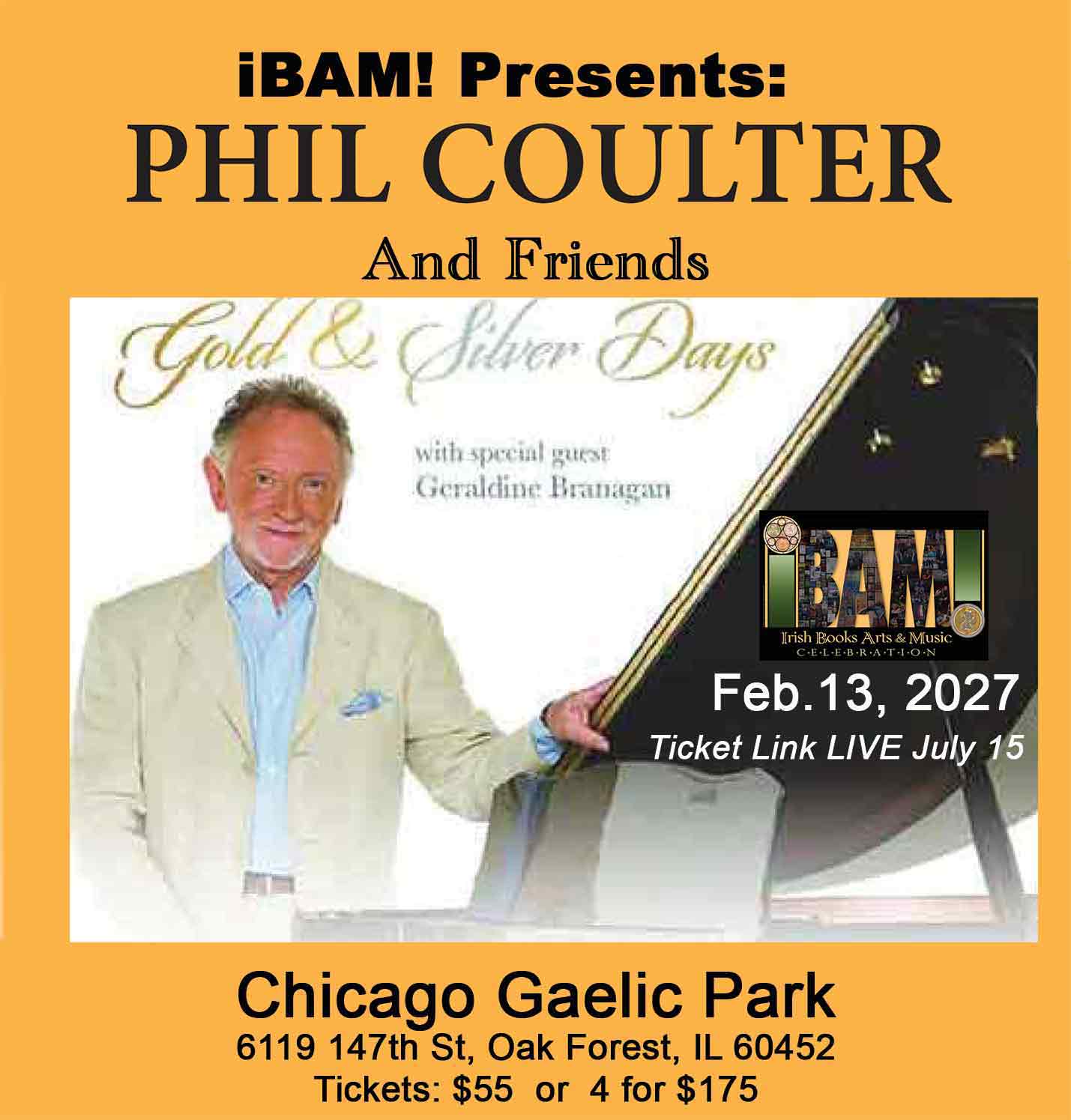
On the South Side, Gaelic Park in Oak Forest serves a different but equally vital function. A venue that has hosted festivals, concerts, céilís, and GAA matches including hurling and Gaelic football for decades, its calendar runs spring through autumn without pause. It is the kind of place where the same afternoon can carry both a championship hurling match and a conversation about what county your grandmother left — and nobody finds the combination unusual. For many South Side families, Gaelic Park is the social fabric of their Irish identity, as it has been for generations.
Print has remained a thread throughout. Irish American News — now in their 50th year of chronicling Chicago's Irish community — has documented the community's life in a way no digital outlet has replicated: new Irish business's parish notes, community news and awards, the arrivals, the obituaries, the milestones. For readers who grew up with it, it is the record of the community's life. For those who arrived more recently, it is the quickest way to understand what has already happened here and who the faces behind the names are today.
Radio, too, has held on where many predicted it would fade. Irish programming on Chicago airwaves has sustained loyal audiences through format changes and ownership shuffles. The Irish-American listener is habitual, and tunes in on Saturday mornings and other radio program days in a pattern that surprises those who expected streaming to have taken over entirely. It hasn't — and the programming that has survived is the kind that feels like a community call-in, not a broadcast.
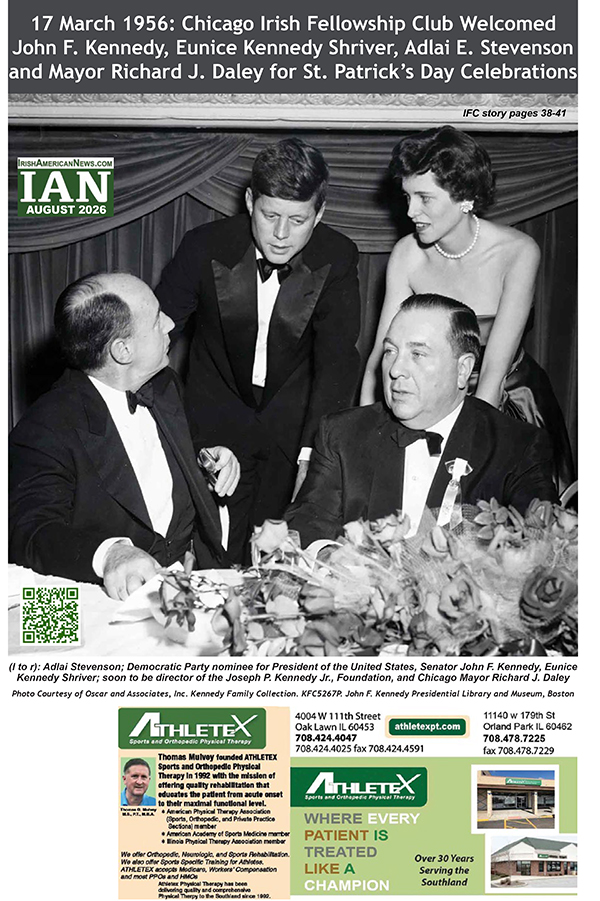
The Ancient Order of Hibernians, the Irish Fellowship Club, Ireland Network, and the United Irish Immigrant Society each serve different segments: the AOH through parish branches and advocacy; the Fellowship Club, Ireland Network through civic and business networks; the Immigrant Society through practical support for recent arrivals. The GAA in Chicago — five county boards, dozens of clubs — runs a parallel calendar for those whose connection to Ireland is also a connection to the game.
The digital turn
What has changed most in the last five years is the role of digital connection. In 2020, weekly Zoom sessions kept the community in contact when travel ceased entirely. Those habits didn't disappear when travel resumed — they evolved.
Cultural newsletters are the understated engine of diaspora connection now. Love Ireland, which reaches 64,000 subscribers predominantly in the United States and Canada, publishes features on Irish heritage, travel, food, language, seasonal traditions, and the deeper history most diaspora readers want but rarely find in mainstream outlets. Its readership — predominantly women aged 35 to 65, many of them third- and fourth-generation Irish-Americans — says consistently that it provides a quality of cultural depth they can't easily replicate from their local community alone. It lands in their inbox on a Thursday morning.
The newsletter is free. It is also the single most common way Irish-Americans outside Chicago's immediate cultural infrastructure encounter Ireland on a weekly basis. In a community where busy professionals and parents can't make it to the Irish American Heritage Center every Thursday, a newsletter that arrives in the inbox is not a supplement to cultural connection — for many, it is the primary form.
Social media plays a role, too, though an increasingly noisy one. Irish heritage accounts on Instagram draw hundreds of thousands of followers for content that is photographically rich but editorially thin. The generation that wants more — that wants to know why the surnames on their family tree are clustered in a specific barony of County Galway, or what the quarter-day festivals meant to their great-grandparents before emigration disrupted them, or how the Irish language survived in Connacht when it disappeared almost everywhere else — tends to find its way to newsletters, podcasts, and platforms that can sustain a longer argument.
The physical connection: travel and language
Chicago's Irish travel to Ireland at a rate that would surprise anyone who assumed emigrant connection fades with each passing generation. The Aer Lingus Chicago-Dublin route is consistently among the airline's best-performing transatlantic services. Heritage tourism — the specific desire to visit a townland, trace a family, stand in the landscape that a great-great-grandmother walked out of in the 1840s or 1880s — drives a significant share of it.
Irish language learning in Chicago has seen a quiet but measurable revival. The Gaelic Cultural Society's classes are full. Online platforms such as Duolingo's Irish course and the structured courses offered by Gaelchultúr have Chicago-area learners numbering in the thousands. The motivation varies — some cite heritage identity, some the difficulty of the language as a challenge, some a desire to understand the placenames on the map of the parish their family left.
What 2026 looks like
What connects all of this — the IAHC calendar, Gaelic Park on a summer Saturday, the GAA leagues, the newspaper that arrives each month, the radio programme on a Saturday morning, the newsletter in the inbox, the heritage trip to Clare or Donegal, the language class on a Tuesday evening — is a community that has decided, consciously or by accumulated habit, that the Irish identity is worth maintaining. Not as performance, not as sentiment dusted off once a year in March, but as a living set of relationships with people, places, stories, and practices that stretch back across the Atlantic.
Chicago's Irish in 2026 are connected to Ireland in more ways, and with more sophistication, than their grandparents could have imagined. The country they stay connected to is also more accessible than it has ever been. The mechanisms have changed. The intention, apparently, has not.
Alex Monroe is editorial director of Synpro Media, which manages audience development for the Dream In Miles cultural travel newsletter network (170,000+ subscribers). The network's Love Ireland newsletter reaches 64,000+ Irish-American and diaspora readers. Enquiries: